The bill is the same. Everything around it is not
A grocery store bills exactly the way a kirana shop does. Scan, weigh, take the money, print. Anybody who tells you a bigger shop needs a different kind of invoice is selling the invoice.
What actually changes is everything around the bill. There are two counters instead of one, so two people are writing into the same stock at the same second. There is a boy on the floor who should be able to check a price and nothing else. There are eleven hundred items and no single person who knows where they all sit.
Grocery store billing software is judged on those, not on how the invoice looks.
Two counters, one set of books
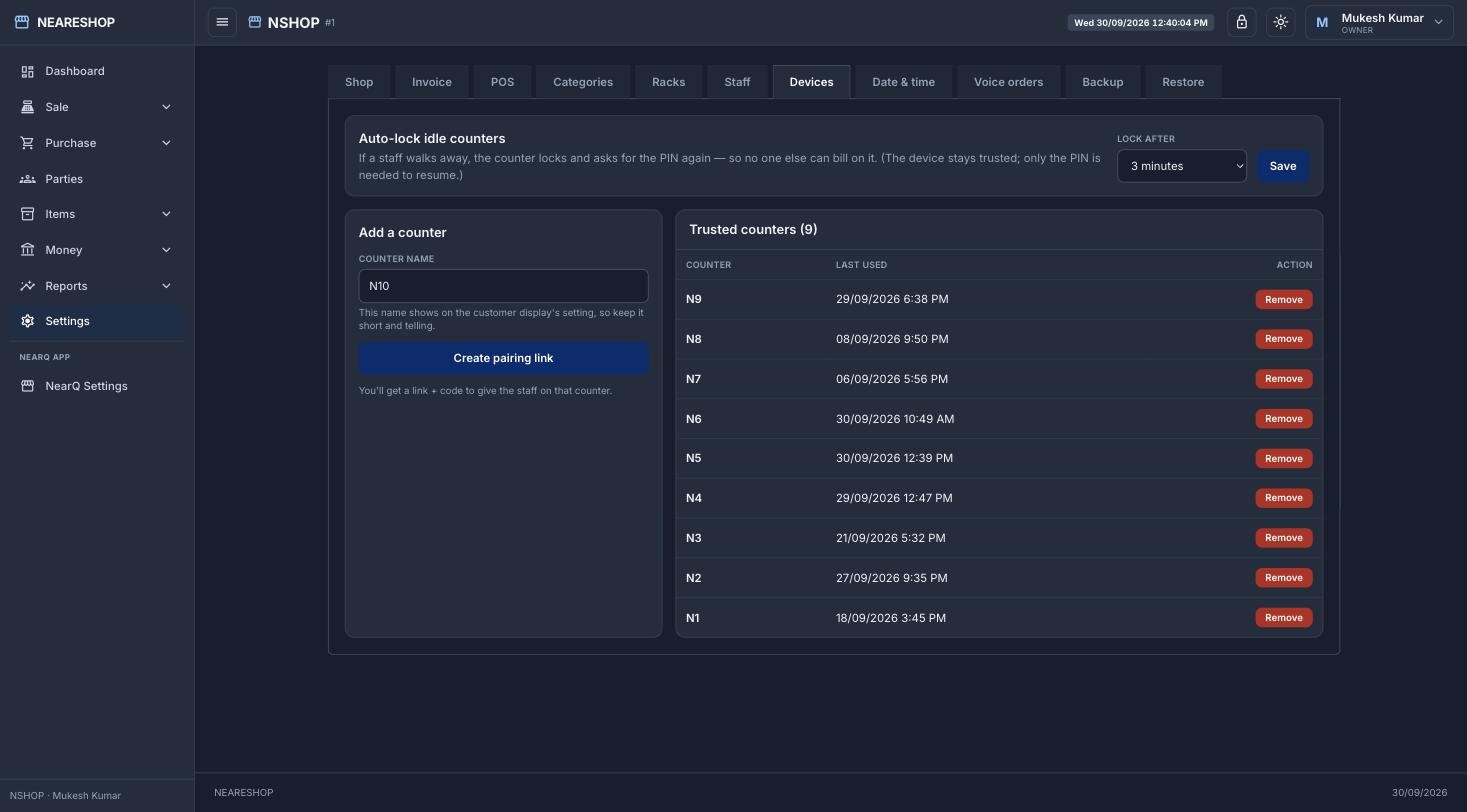
The moment a second till opens, the question is whether the two of them are sharing one stock figure or quietly keeping two.
They have to share one. A packet sold on counter two has to be gone from counter one before the next customer asks for it, and the day's takings have to be one number, not two added up by hand at night.
NSHOP runs every counter against the same shop. The till on the computer, the one on the phone and the screen facing the customer are three windows onto the same thing, not three programs that talk later.
Two counters keeping two sets of figures is not a bigger shop. It is two shops in one room.
Staff, and what each of them can touch
In a kirana shop the owner is the counter. In a grocery store he is not, and that is the whole difference.
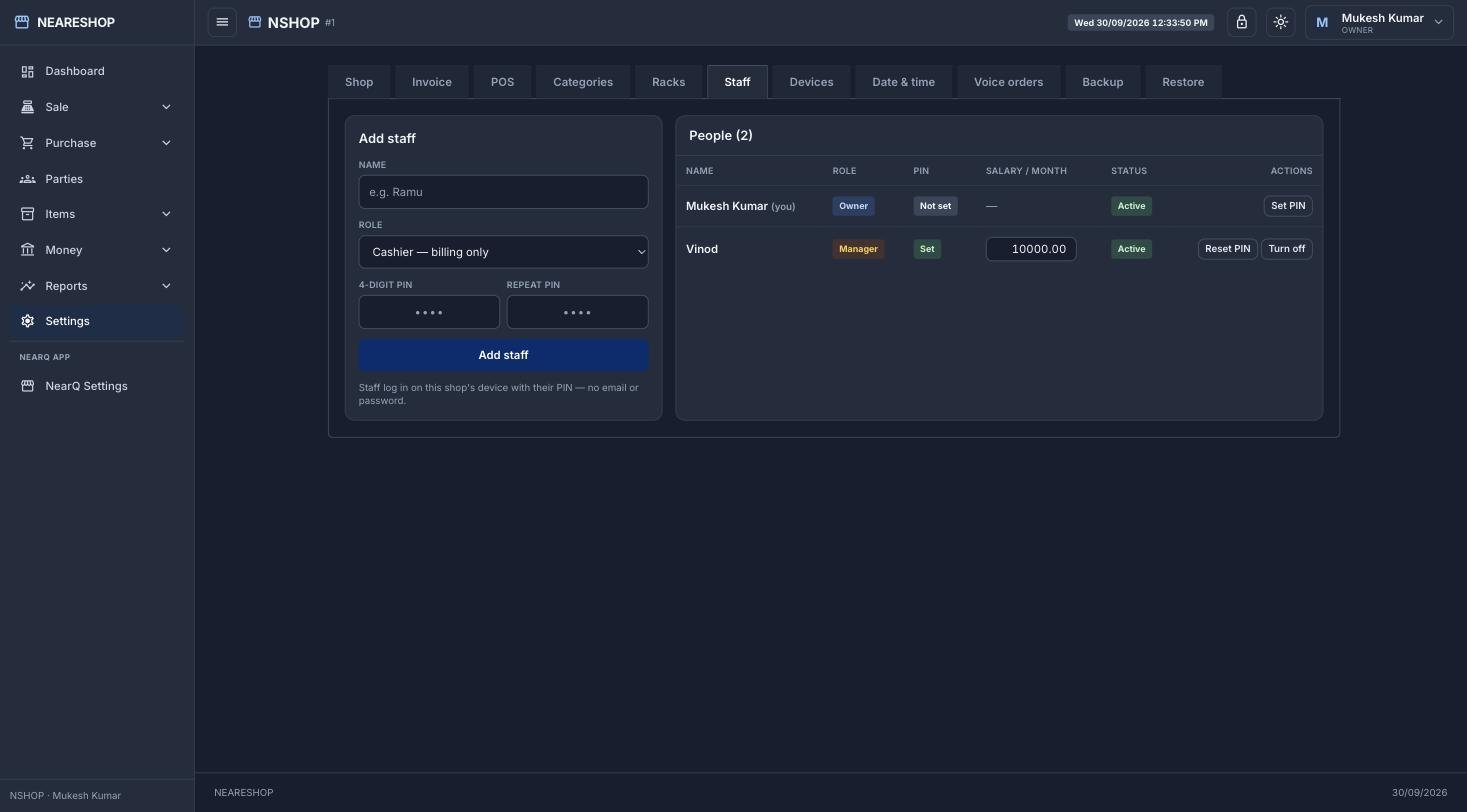
Somebody has to be able to cut a bill without being able to change a price. Somebody has to check stock without seeing the profit report. And when a figure looks wrong at the end of the month, it has to carry the name of whoever touched it.
- Each person signs in as themselves with their own PIN, not a shared password taped under the counter
- What each one can open is set once and stays set
- Every change to an item is written down with the name and the time
- Discounts beyond a point need the owner, not an argument
Where is it. Rack and bin
With three hundred items a shop runs on memory. With thirteen hundred it does not, and the first sign is a customer being told something is out of stock while two boxes of it sit on a high shelf.
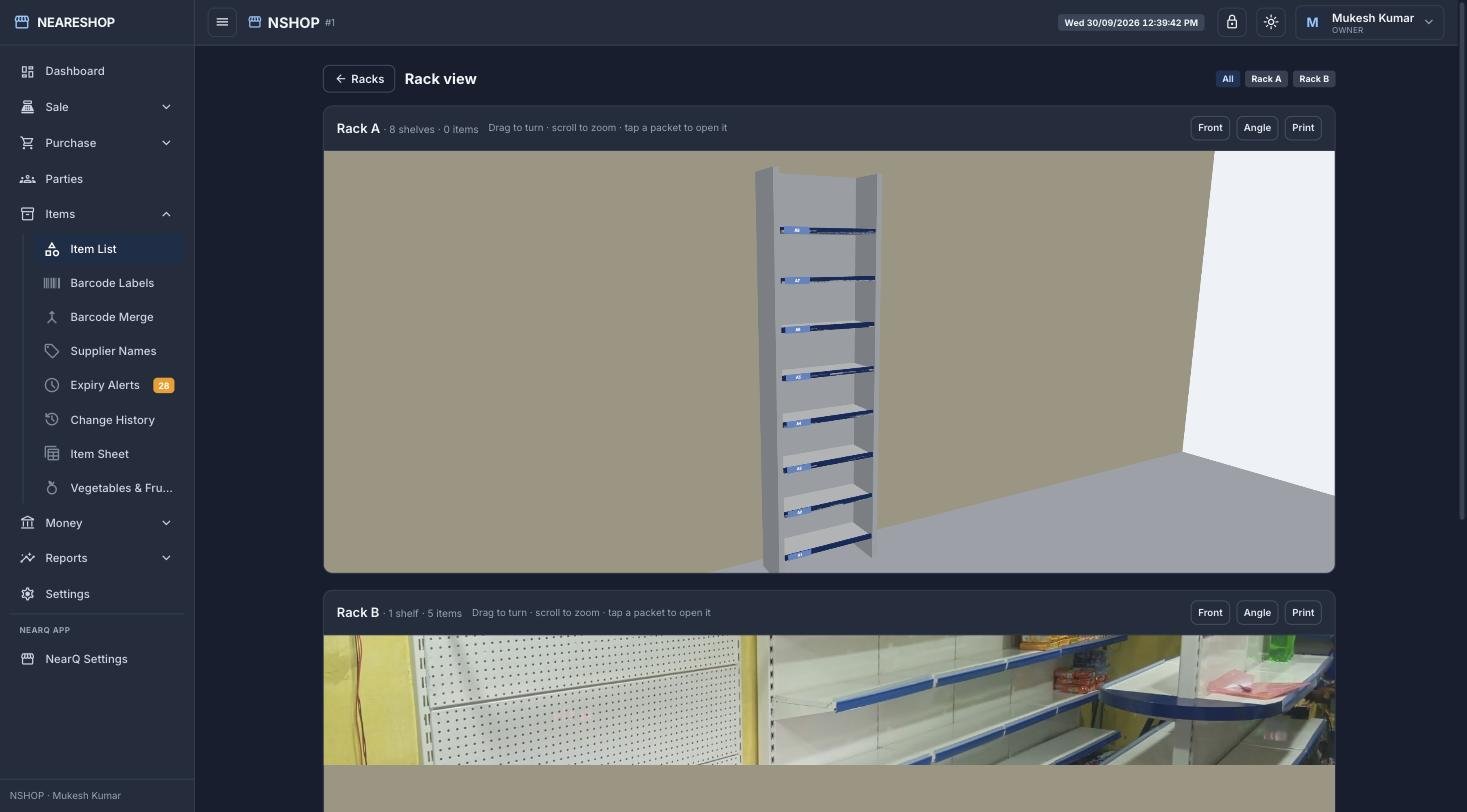
Every item in NSHOP can carry a rack, written the way the shop writes it: A1, B7, whatever is painted on the shelf. It shows on the till, on the purchase bill and on the stock report, so putting goods away and finding them again are the same job.
The day has to close against cash
A bigger shop does not lose money in one big hole. It loses it in small ones that nobody looks at.
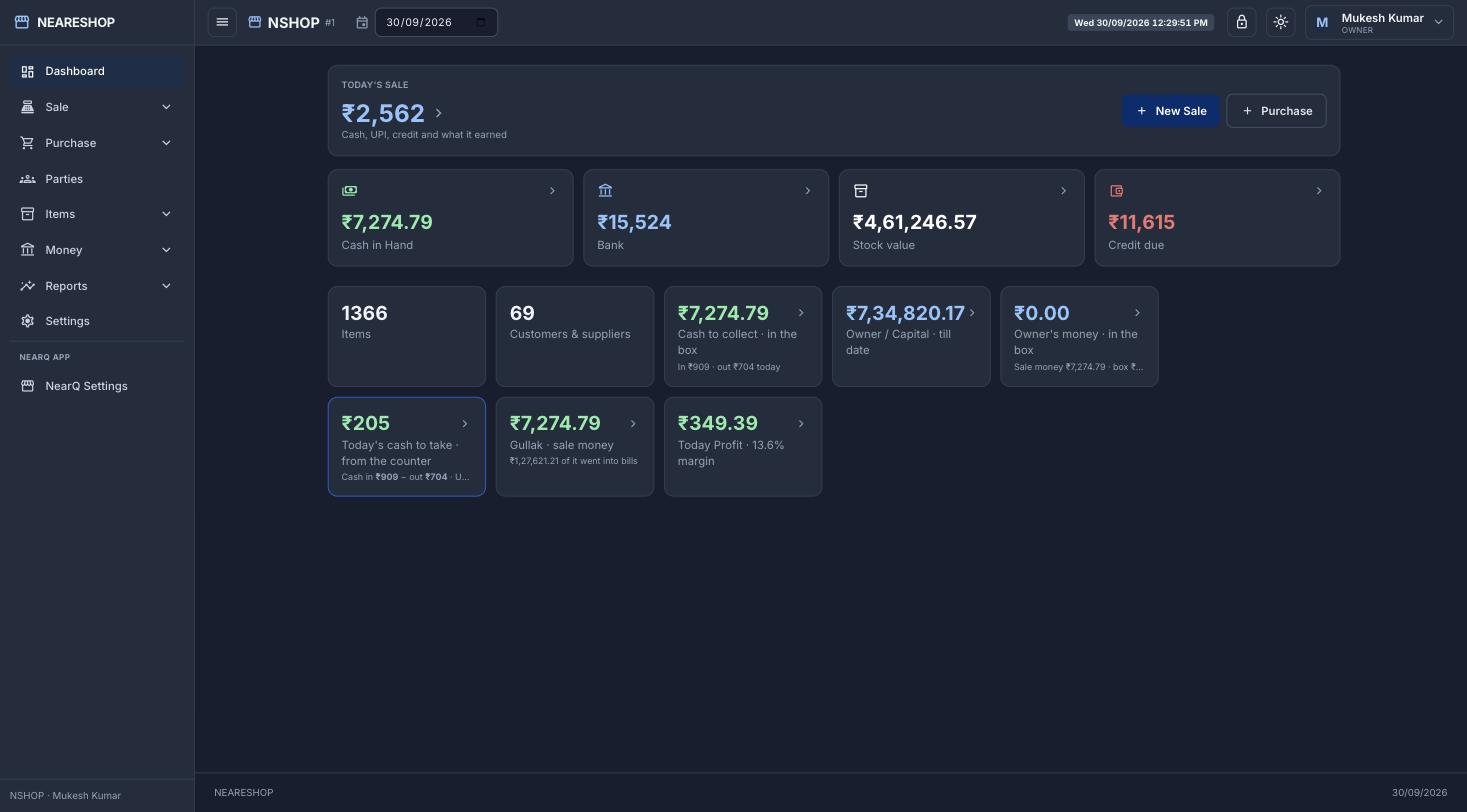
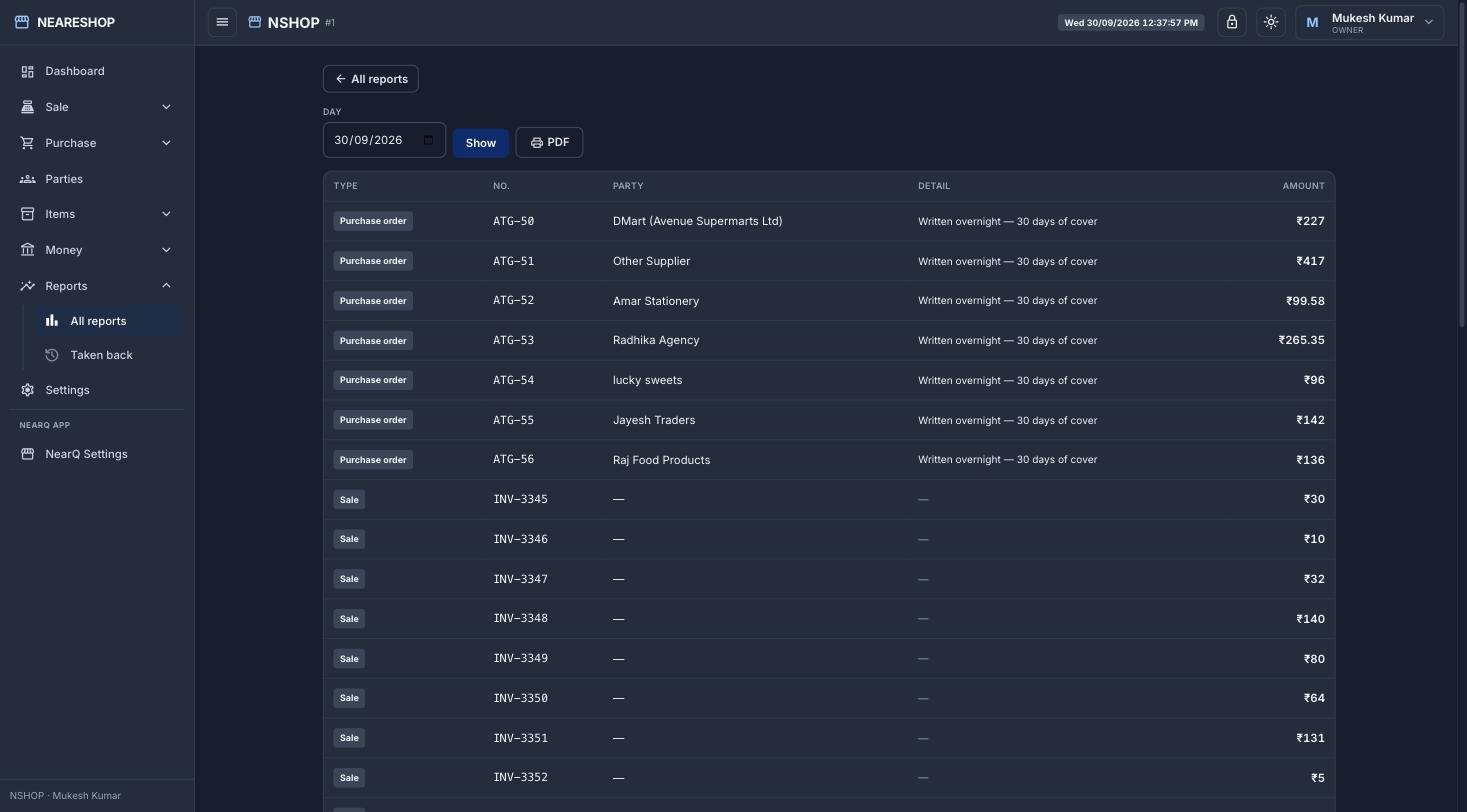
The only way to find them is to count the drawer against what the till says it should hold, on the day, not at the end of the month when nobody remembers anything. The day book lays out what came in, what went out and what is left, in the order it happened.
A gap found on the day is a conversation. The same gap found in March is a loss.
The reports a bigger shop actually reads
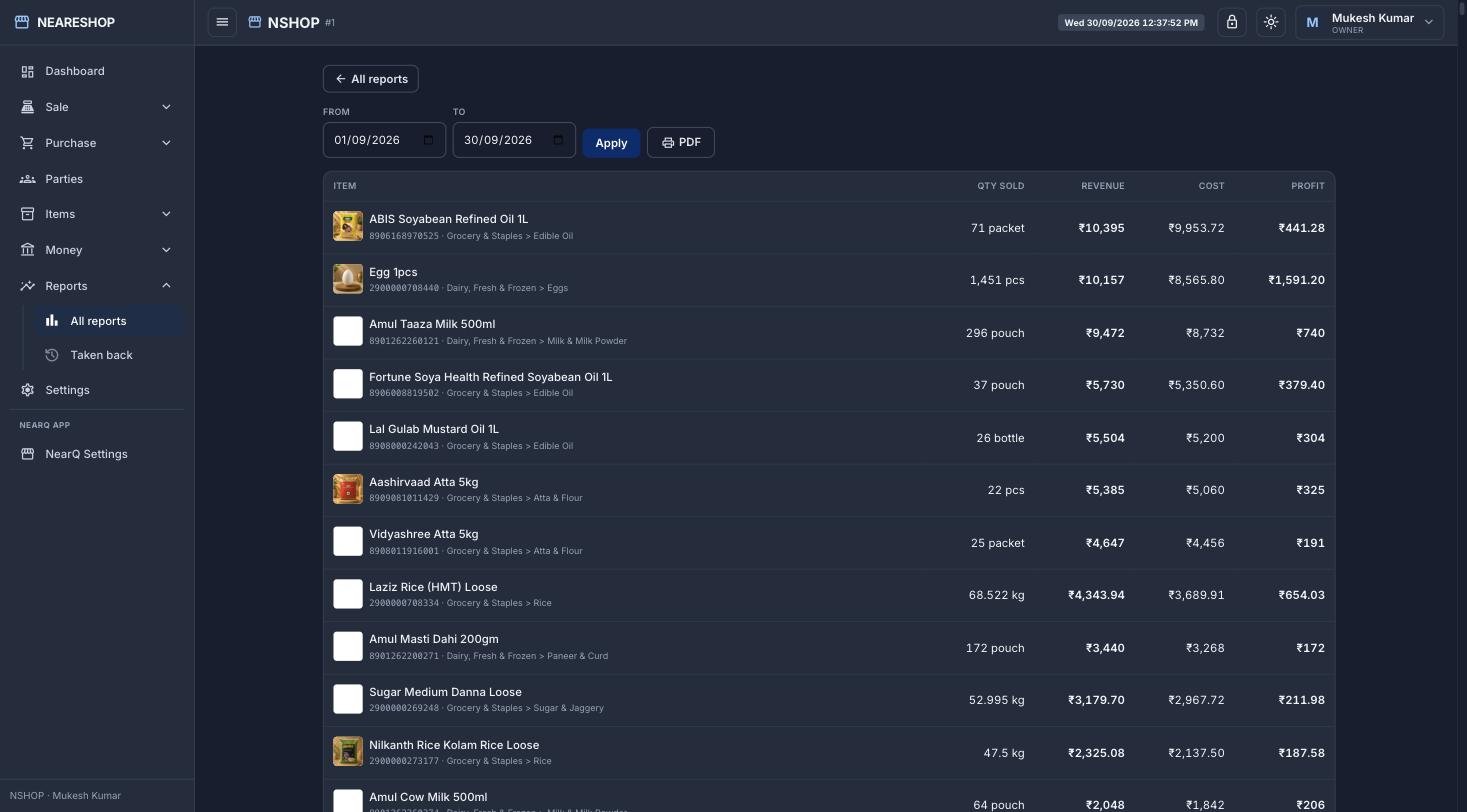
Nineteen reports is more than anybody reads. In practice a grocery store lives on four.
- Stock. What is on the shelf, what it cost, what it is worth.
- Item sales. What moved and what did not. The second half is where the money is parked.
- Profit. Worked out against what the goods actually cost, not a margin typed once and forgotten.
- Day book. Cash in, cash out, what is left.
The rest are there for the week they are needed.
Free grocery billing software, and what it costs later
There are free packages and they do bill. What they usually do not do is the part a grocery store needs: more than one counter on one set of books, people signed in as themselves, and stock that moves as the bill is cut.
The cost of free shows up in the second year, when the stock figure has drifted so far from the shelf that nobody trusts it, and there is no way to find out which of the four people at the counter was right.
NSHOP is a monthly price with the counters, the staff, the reports and the customer app in it. No charge per bill, no charge per item and no charge per counter.
Questions people ask
What is the best billing software for a grocery store in India?
The one that runs every counter against one set of books, signs each person in as themselves, and takes stock off as the bill is cut. Those three decide whether the figures still mean anything after a year. The invoice itself is the easy part and every package does it.
Can two counters use it at the same time?
Yes, and they have to. Both counters work against the same stock and the same day, so a packet sold at one is gone at the other straight away and the day's takings are one number.
Is grocery store billing software different from kirana billing software?
The billing is the same job. What a grocery store adds is more than one counter, staff who should only reach their own work, racks so goods can be found, and reports somebody other than the owner reads.
Is there free grocery billing software?
There are free packages. Most of them stop at the invoice and leave out the multiple counters, the staff permissions and the live stock, which is the work in a shop this size. Ask what happens in the second year before paying nothing.
Does it work for a supermarket as well?
The same software runs a supermarket counter. What a supermarket adds beyond this is mostly more of the same: more counters, more staff and more racks, all of which are already settings rather than a different product.